Hyundai
Hyundai i30 Common Problems: A Wrecker's Guide for Australian Owners
· 5 min read
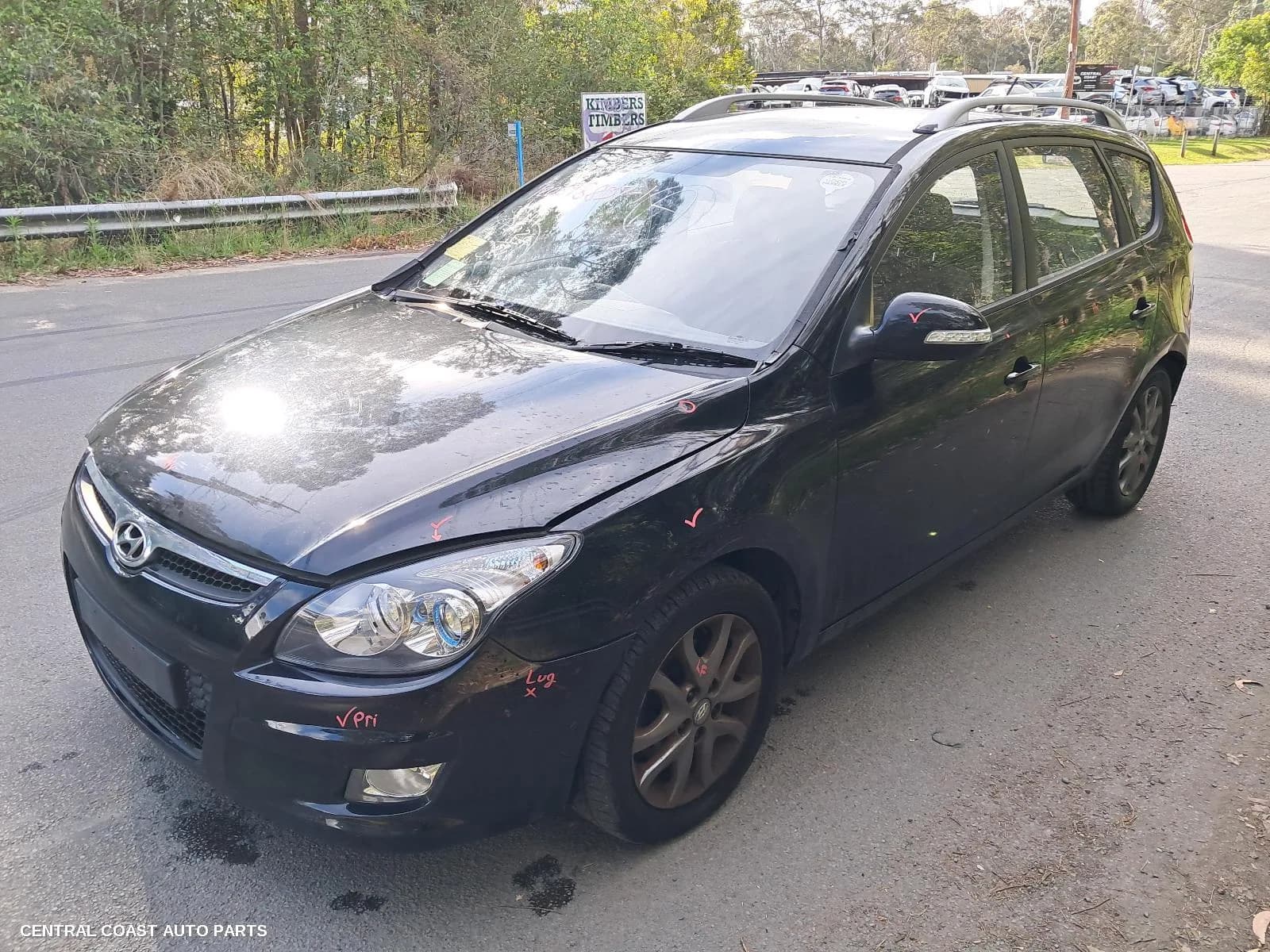
The Hyundai i30's most reported problems are engine knock and oil consumption on some petrol engines, hesitation from the dual clutch automatic fitted to the turbo models, a clunk or click from the steering column, and the electrical niggles you would expect from a car this common. None of them make the i30 a bad car. It has been one of Australia's best selling small cars for more than fifteen years, which is exactly why the patterns are well known and parts are easy to find.
Hyundai is the biggest make we hold at our Berkeley Vale yard and the i30 is one of the cars we dismantle most, so this guide comes from what actually fails on the cars that arrive, not from forum guesswork. It covers the common problems by generation and engine, what they cost to fix, and when a tested used part is the sensible answer.
Which Hyundai i30 generations does this cover?
Australian i30s fall into three hatchback generations, plus a sedan:
- FD, 2007 to 2012. The first i30. A 2.0 litre petrol and a 1.6 litre turbo diesel, with conventional four speed automatics. Now high kilometre and cheap to keep running.
- GD, 2012 to 2017. The most common i30 on the road. A 1.8 litre petrol, a 1.6 litre direct injection petrol in some models, a 2.0 litre petrol in the SR, and a 1.6 litre diesel.
- PD, 2017 to 2022. A 2.0 litre petrol, a 1.6 litre turbo petrol in the SR and N Line with a seven speed dual clutch automatic, a 1.6 diesel, and the performance i30 N.
- i30 Sedan, 2020 on. The car sold overseas as the Elantra, badged i30 in Australia.
If you are not sure which engine yours has, the build plate or your registration papers settle it, and we can match parts to your VIN in one call on (02) 4388 1818.
Do Hyundai i30 engines have problems?
The i30's petrol engines are mostly reliable, with patterns worth knowing:
- Knock and oil consumption on some 2.0 petrol engines. A number of owners of GD and PD era 2.0 litre engines report a knocking or tapping sound, and some report the engine using oil between services. Check the oil level every few weeks and top it up; it costs nothing, while running an engine low costs the engine. If yours already knocks loudly, have a workshop diagnose it before it gets worse.
- Carbon build-up on direct injection engines. The 1.6 litre direct injection petrol can build carbon on the intake valves over time, which shows up as rough running and lost performance. It is a cleaning job, not an engine replacement.
- Diesel particulate filter trouble on later diesels. As with every modern diesel, a car that only does short trips never gets hot enough to clean its filter. A regular highway run is the prevention.
When an engine is genuinely finished, a tested used engine from a verified donor is usually the economic fix on a car of this age, and the i30 shares engines with several other Hyundai and Kia models, which widens the choice. Everything we said in our second hand engines guide applies here. Current stock is on our used engines page.
What is the problem with the i30 dual clutch gearbox?
This is the same story as the Tucson, and for the same reason: the seven speed dual clutch automatic fitted to the PD i30's 1.6 turbo. Owners report hesitation pulling away, a judder in slow traffic and the occasional delay before the car takes up drive. Some of that is how a dual clutch behaves; some is genuine clutch pack wear, made worse by stop start city driving.
Ask for a software update and a proper adaptation reset first, from a workshop that knows these transmissions, before anyone talks about a rebuild. If the clutch packs or the mechatronic unit really are worn, a complete tested used transmission from a lower kilometre donor costs a fraction of a new one. We covered the dual clutch in more depth in our Hyundai Tucson guide. Current stock is on our used gearboxes page.
The conventional automatics in the FD and GD are simpler and generally hold up well, provided the fluid has been changed.
What smaller i30 problems do owners mention?
- A clunk or click in the steering. A common complaint on the GD i30 is a knock or click felt through the steering wheel at low speed, often traced to a worn coupling in the electric power steering column. It is a known, fixable fault, and a used column from a donor is a sensible way to do it.
- Electrical faults. Door lock actuators, window regulators, head units, reversing cameras and instrument clusters are steady sellers for us. All are expensive new and cheap from a donor.
- Suspension and brakes. Front strut mounts, sway bar links and brake wear show up at higher kilometres. Buy brake friction parts new; used struts and arms from a lightly used donor are a sensible saving.
- Recalls. Some i30 model years were recalled in Australia. Check your VIN on the government vehicle recalls website and make sure any recall work has been done. It is free at a Hyundai dealer.
- Panels and lights. A popular small car gets car park damage. Bumpers, doors, mirrors and headlights are our most requested i30 parts, and a genuine panel in your colour saves a respray on top of the part price. Browse used body panels by year.
Is the i30 expensive to repair in Australia?
Parts supply is the i30's great strength. Because Hyundai sold so many, donors are plentiful, and that keeps used part prices sensible. The big savings against a dealer quote are engines, transmissions and steering columns. Panels, lights and mirrors are usually in stock, often in the right colour. Electronics are painful new and cheap used, but must be matched to your build, so ring us with the VIN.
Buy from a licensed yard that names the donor, tests the part, photographs it, gives a written warranty and an invoice. Under Australian Consumer Law those consumer guarantees apply to used parts bought from a business, which is a protection no private marketplace deal offers.
Should you still buy a used Hyundai i30?
Yes, with eyes open. Prefer a car with service history over one with low kilometres, check the oil level on any 2.0 petrol before you buy, listen for knock from a cold start, drive a dual clutch model in slow traffic to feel for judder, and turn the steering lock to lock at walking pace to listen for a clunk. A well serviced i30 is a genuinely good small car, and when something wears out you own one of the easiest cars in Australia to find parts for.
Need an i30 part today? See what is on the shelf on our Hyundai wreckers page, search the yard by year and model, or ring (02) 4388 1818 with your registration and we will check fitment while you are on the phone. We deliver to Sydney, Newcastle and Australia wide, or you can collect from Berkeley Vale on the Central Coast.